
Your Source For Miscanthus Giganteus
Phone: (989)743-4344 or Email: don@mapleriverfarms.com


We offer redeemable gift certificates.
Introduction:
Miscanthus (Miscanthus X Giganteus)) is a "woody" perennial grass of Asian descent, that when established, will grow to at least 10' yearly. This grass is sterile triploid (three sets of chromosomes) formed by a natural cross of miscanthus sacchariflorus and miscanthus sinensis. Miscanthus Giganteus is a non-invasive grass that can be controlled because it has no viable seeds and runners underground. Rhizomes survive to negative 10°F in the ground.
It produces new shoots (stalks) annually which average 3/8" in diameter, with 4" average cluster spread. Because it is sterile it is propagated by rhizome division. The crop is established by planting pieces of the root (rhizomes), which are cut to about 4" in length. The cold hardy grass grows rapidly (C4 photosynthesis), has low nutrient requirements, has few pests or diseases and produces high yields.
The miscanthus photosynthetic mechanism appears to be better adapted to low temperatures than that of many other C4 crops, equipping it for high productivity under relatively cool temperatures. At full maturity it can yield up to 12 tons of dry material per acre (about fourth year on). There are higher yields being reported yearly. It shows great potential as a biomass crop. As with other bio-energy crops, the harvested dry stems may be used as fuel for heat, electricity or converted to ethanol.
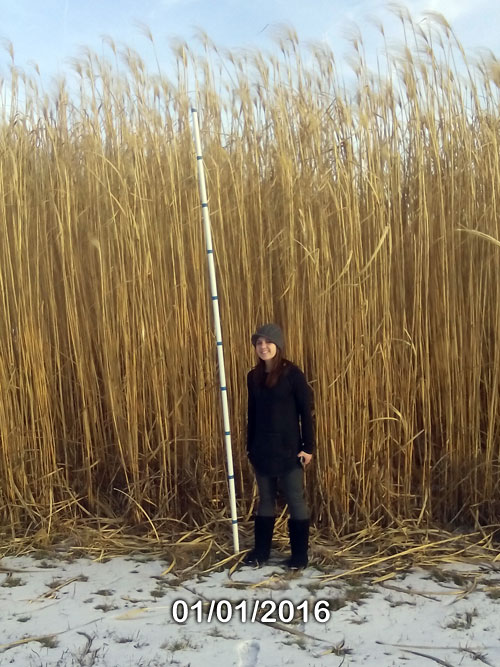
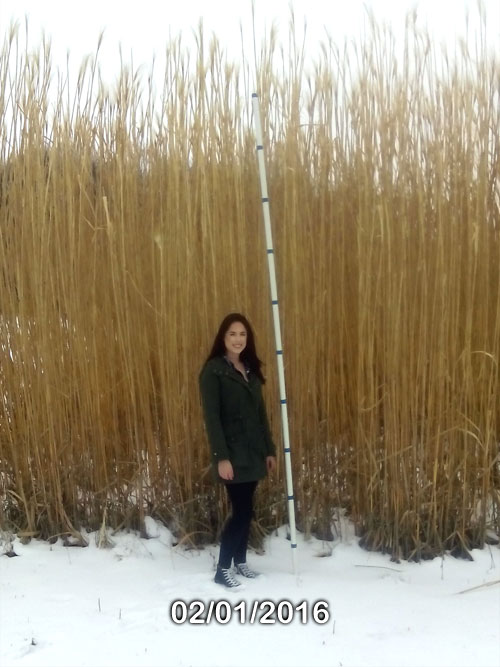
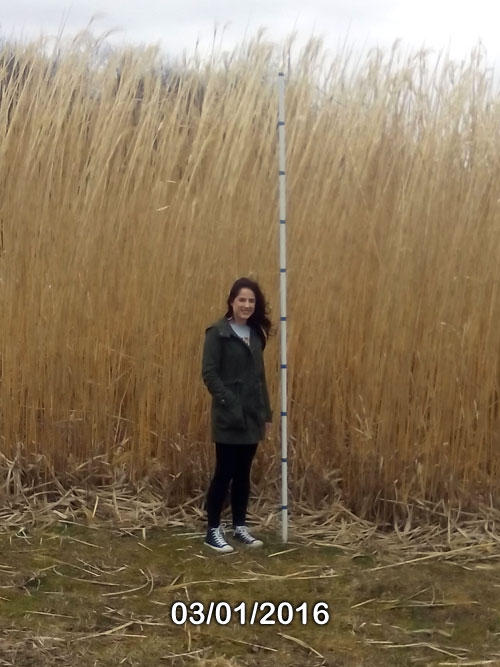
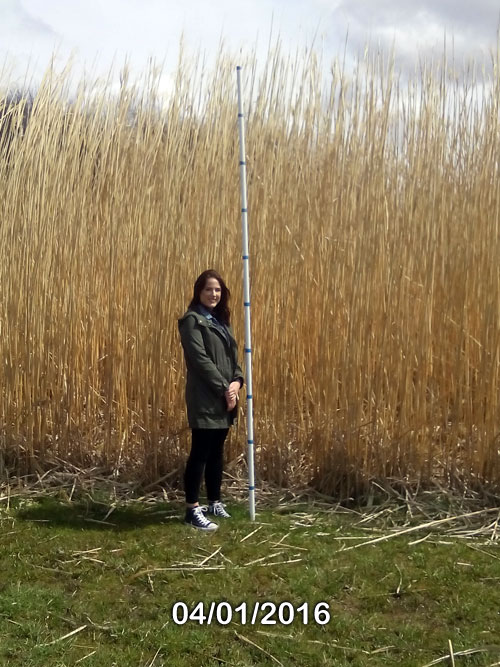
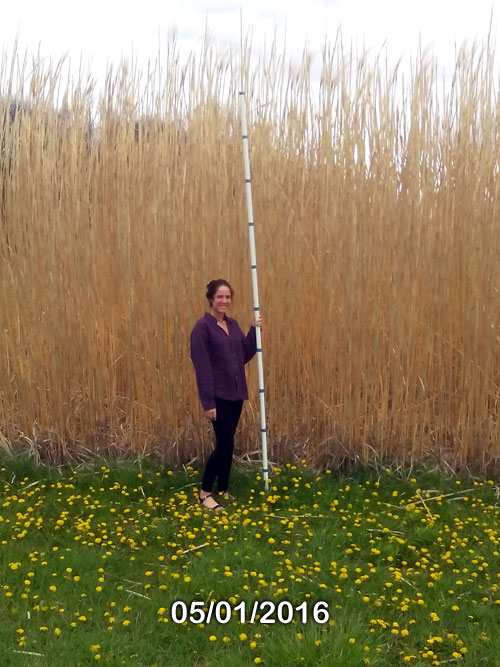
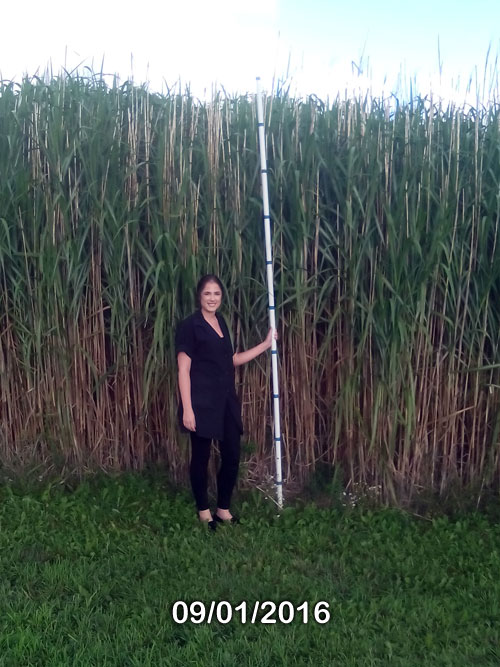
At first frost, miscanthus pulls nutrients (sinensis) from above ground to the rhizomes below to prepare for the next year's growth. It is about a two week process. It also is changing shades in its path to the golden brown color it holds for the rest of the winter till next springs growth appears. The 12 photos below taken the first of every month show the seasonal changes of miscanthus.
The two links below have a lot more information on the history of Miscanthus X Giganteus. One is about the winter hardiness trial and the other is about the historical genetic diversity of the cultivars as they moved from Japan to Denmark in the 1930's and subsequently distributed throughout Europe and North America.
Click this link to read an article (with references) on the many uses of Miscanthus.



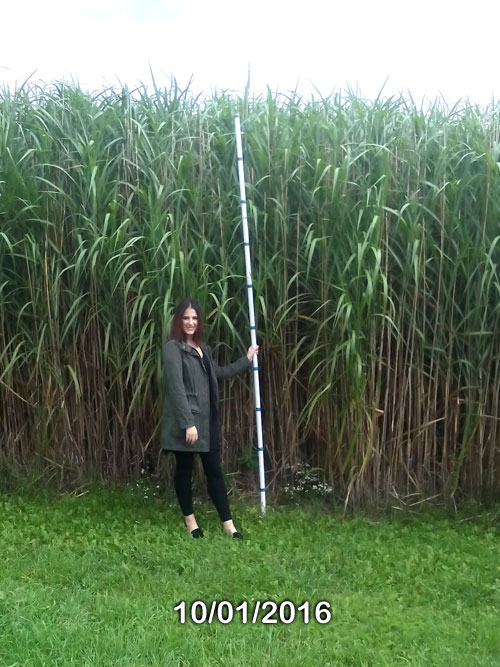
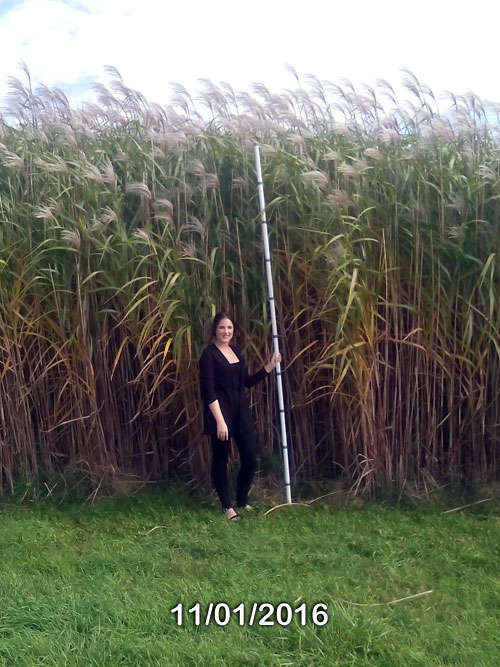
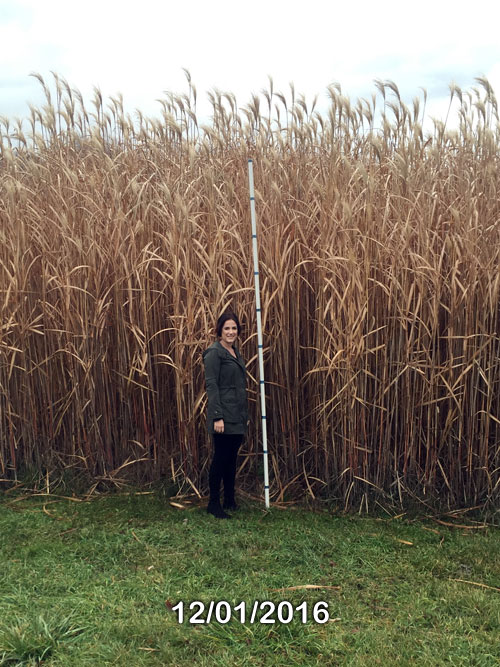
Wildlife/Deer Habitat/Cover:
Besides its use as an alternative energy, we have discovered miscanthus makes an excellent habitat for deer, turkey, quail, etc. (wildlife cover).
Miscanthus is being used heavily for screening roadsides, food plots, and field division.
Hedge screening can be planted with wide spacing to provide food plots between, preferably planted with a strong curve to add privacy in the plot.
Another idea is for screening your parking area and walkway to the hunting blind. Remember, every year these rows will expand approximately 4" in each direction.
A little bit of field planting can also promote bedding areas, but field planting is primarily used in the production of biomass.
Backyard Privacy Screening:
Miscanthus x Giganteus is an inexpensive natural alternative hedge screening. Whether you use it for a hedge screen, focal point, or to decrease street noise, miscanthus plays a role in your yard and landscape. These plants offer you the privacy to fit your needs.
Year around miscanthus offers a barricade for privacy needs. A green wall in the summer months and golden colored cane during the winter. When the leaves fall off during the winter, the cane will stand through the heaviest snowfall to provide your screen coverage.
Individual vs. Cluster Planting:
The main advantage of planting an individual rhizome is cost and use of mechanized planting. An individual rhizome in bulk offers a greater cost savings when planting long rows or large acreage. Planting rhizome clusters generally require digging individual holes, which increase your labor coast. The main advantage of planting clusters is you get more growth the first year and is more than likely to hit full height the second year. Planting clusters is the same spacing as the individual rhizomes. The rate of spread/blockage isn't faster but you do gain height, establishment percentage, more stalks, and a year of establishment of the screen. So the first year you end up with second year growth. That gets you to a screen/blockage faster. If they were spread apart father during planting, you would lose what was trying to be gained, faster screening. The clusters get best value used on short runs where a year gain on height is necessary.
Planting and Care Information:
Keeping rhizomes fresh until planting - Each bag has a scoop of moist chopped miscanthus for moisture control. Rhizomes can be stored easily two weeks in a refrigerator or basement. Do not put rhizomes in the freezer. The cold slows the growth.
Establishing a Hedge Row - We suggest the following planting pattern to establish a hedge row/screen. The individual rhizomes should be planted in a double line. Each line would be 18" apart with the rhizomes planted down these lines also 18" apart staggered (See diagram below). 133 rhizomes are used per 100 feet. Planting a third line of rhizomes on the hedge row will provide thicker screen coverage at a faster pace. This uses 200 rhizomes per 100 feet.

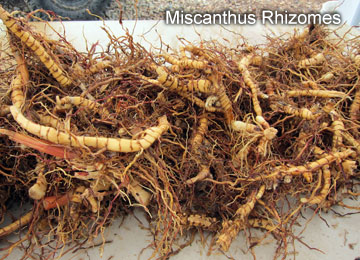
Planting - The individual rhizomes should be planted 2-4" deep, horizontally with nothing above the ground. Any new growth on the rhizome, such as pink shoot or grass blade, can be planted above ground and in shallower soil with 1" of soil on top. A well-tilled bed does help the roots establish quicker but is not necessary. A ground temperature of 60 degrees Fahrenheit on average for planting is best. Soil only needs to be kept moist and warm, do no over water, this will cause them to rot before they root. Do not worry so much about grass competition, but more so with broad leaf weeds that block sunshine, just during the first year establishment. Second year growth will out pace everything. PH should be between 5.5 and 7.5.
Expected Growth - The first year growth of an individual rhizome is 1-3 stalks, 1-3' tall. The second year you will get an average of 7 stalks, 6-7' tall, and the third year the clusters diameter will be approximately 14", with about 25 stalks at full height (11+). By the fourth year, two rhizomes planted 18" apart will grow into each other. Rhizomes spread slower in heavy soil (clay) and a little faster spread with sandy loam.The heaviest growth is always on the new outside spread of the cluster.
Fertilizing/Maintenance - Fertilizer demands are low due to the plant's efficient nutrient use and its ability to pull nutrient back down to the rhizomes at the end of each growing season. But a yearly fertilization schedule will promote more growth in rhizomes and stalks. The better the soil, the better the growth./p>
We fertilize about 3 weeks after planting with a "triple" fertilizer. Keep the rate of application comparable to fertilizing new lawn installation. At the same time we spray 2-4D based herbicide to knock back the new weed seed germination that has taken place. Miscanthus is in the grass family like corn. Common corn herbicides that have been used successfully are; Dual, Atrazine, and 2,4-D.
It is not necessary at the end of year to cut down the dead stalks. Let the dead stalks accumulate to make the row look thicker for the next winter. It is a benefit to clean up (cut down) all the interior dead stalks approximately every 5 years, after the original row is 7 to 8 years old.
Products:
Individual Miscanthus Rhizomes:
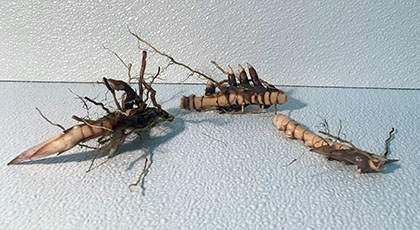
An individual rhizome is separated from a three year old (plus) rhizome cluster. The advantage of planting an individual rhizome is the cost. Individual rhizomes may take longer to establish, but the use of mechanized planting is possible, cutting down on time and labor. Therefore, individual rhizomes used in bulk offer a greater cost savings.
This product is shipped bare root, without dirt. Moist chopped miscanthus added for moisture control.
Available only in the spring.
| Individual Miscanthus Rhizomes | ||||
|---|---|---|---|---|
| • All order quantities are individually counted for accuracy. | ||||
| • Minimum order quantity is 50 rhizomes. | ||||
| • For shipment planning; Approx. 20 rhizomes = 1 lb. | ||||
| Priced by order quantity. | ||||
| 50 - 999 | @ | $0.85 | ||
| 1,000 - 1,999 | @ | $0.82 | ||
| 2,000 - 3,999 | @ | $0.70 | ||
| 4,000 - 17,999 | @ | $0.62 | ||
| 18,000 or more | @ | $0.60 | ||
| Add-on orders after receipt of large quantity orders will be considered stand-alone, and not receive the same original discount.
The prices below are considered cash or check prices. There will be a 2.5% non cash/check charge added to all credit/debit card sales. Upon check out you have the choice to mail a check, which we prefer, to eliminate the 2.5% fee. |
||||
We reserve the right to limit resellers or have no sale.
Flat Rate Shipping on Individual Rhizomes:
10 Miscanthus Rhizomes:
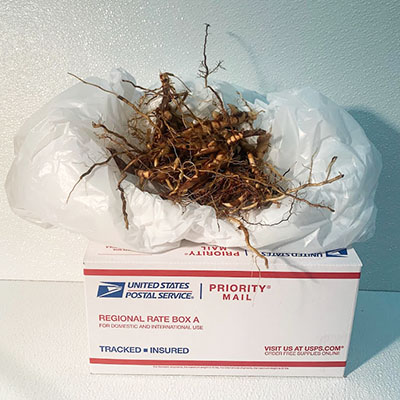
We have 10 individual rhizomes in a flat rate box for $18.95, this includes shipping. This product is shipped bare root, without dirt. Moist chopped miscanthus added for moisture control.
30 Miscanthus Rhizomes:
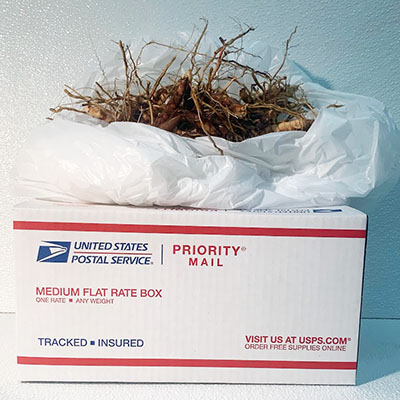
We have 30 individual rhizomes in a flat rate box for $39.95, this includes shipping. This product is shipped bare root, without dirt. Moist chopped miscanthus added for moisture control.
60 Miscanthus Rhizomes:
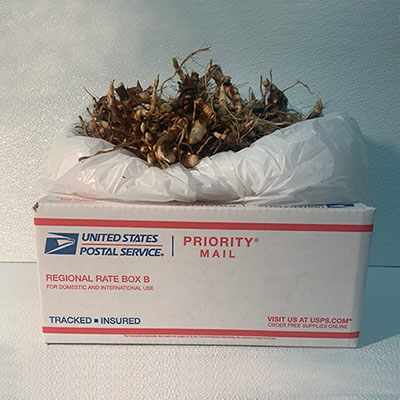
We have 60 individual rhizomes in a flat rate box for $67.95, this includes shipping. This product is shipped bare root, without dirt. Moist chopped miscanthus added for moisture control.
100 Miscanthus Rhizomes:
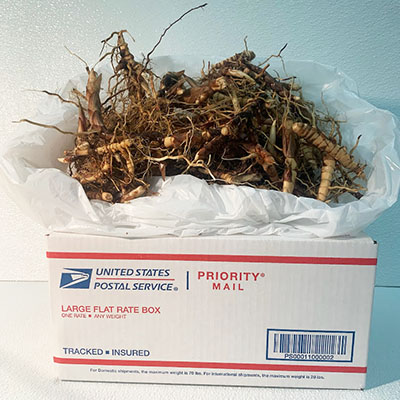
We have 100 individual rhizomes in a flat rate box for $104.95, this includes shipping. This product is shipped bare root, without dirt. Moist chopped miscanthus added for moisture control.
Miscanthus Rhizome Clusters:
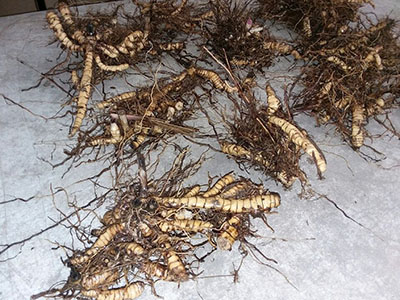
A rhizome cluster is a grouping of rhizomes. The benefit is more growth the first year and most likely full height the second year. Rhizome Clusters are always hand planted, as they are to large for any machine-type planting.
This product is shipped bare root, without dirt. Moist chopped miscanthus added for moisture control.
Available only in Spring until May 27th.
| Rhizomes Clusters | ||||
|---|---|---|---|---|
| Quantity | Price | |||
| 1 - 99 | @ | $7.00 each | ||
| 100+ | @ | $6.50 each | ||
| Add-on orders after receipt of large quantity orders will be considered stand-alone, and not receive the same original discount.
The prices below are considered cash or check prices. There will be a 2.5% non cash/check charge added to all credit/debit card sales. Upon check out you have the choice to mail a check, which we prefer, to eliminate the 2.5% fee. |
||||
Flat Rate Shipping on Rhizome Clusters:
3 Rhizome Clusters:
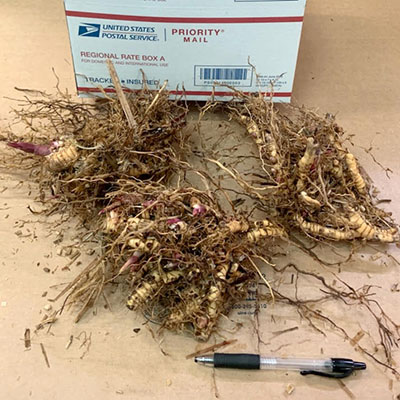
We have 3 rhizome clusters in a flat rate box for $31.95, this includes shipping. This product is shipped bare root, without dirt. Moist chopped miscanthus added for moisture control.
5 Rhizome Clusters:
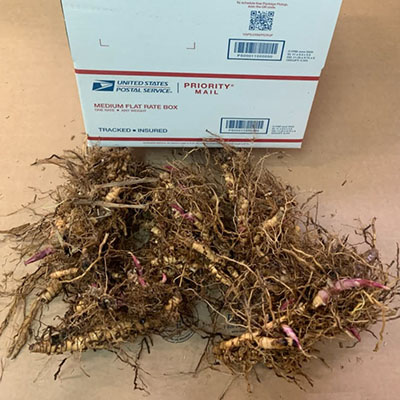
We have 5 rhizome clusters in a flat rate box for $49.95, this includes shipping. This product is shipped bare root, without dirt. Moist chopped miscanthus added for moisture control.
6 Rhizome Clusters:
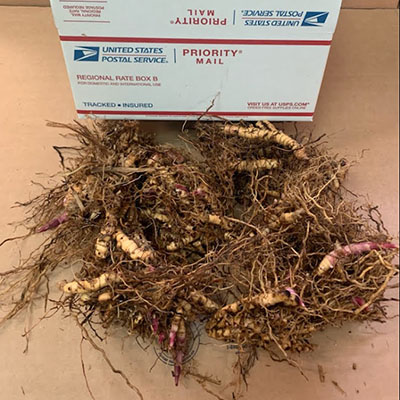
We have 6 rhizome clusters in a flat rate box for $57.95, this includes shipping. This product is shipped bare root, without dirt. Moist chopped miscanthus added for moisture control.
8 Rhizome Clusters:
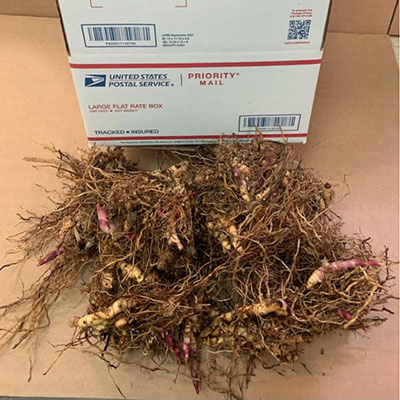
We have 8 rhizome clusters in a flat rate box for $75.95, this includes shipping. This product is shipped bare root, without dirt. Moist chopped miscanthus added for moisture control.
Establishment (Biomass):
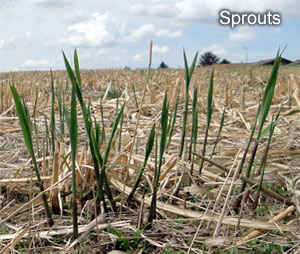
The rhizomes are planted about 2-4" deep, horizontally into a well prepared seed bed in the spring as soon as soil is workable. A little deeper if the soil moisture level is low. Europe has been working miscanthus for over ten years. They plant at one plant per square meter for establishment. Here in the U.S. we are planting at one rhizome per square yard - three foot plant spacing in rows 3' apart. That rate would require approximately 4,850 plants per acre. Row layout and density is up to the grower based upon a field planted to be lifted in two years (denser) or for establishment. Also, a field planted to match equipment already owned for cultivation could change row width and spacing.
Good yields can be achieved on a wide range of soils but the key to high tonnage is moisture supply. A wide range of PH is tolerated but growth is best between 5.5 and 7.5 PH. Sandy or free draining soils only yield well if rainfall is adequate so should be avoided if possible.
This is a crop that will produce peak biomass tonnage production for 15 years then slowly lose tonnage being there's no room for rhizomes to spread.
Harvesting:
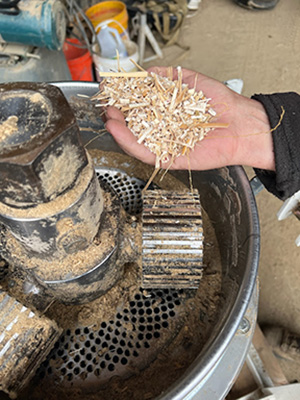
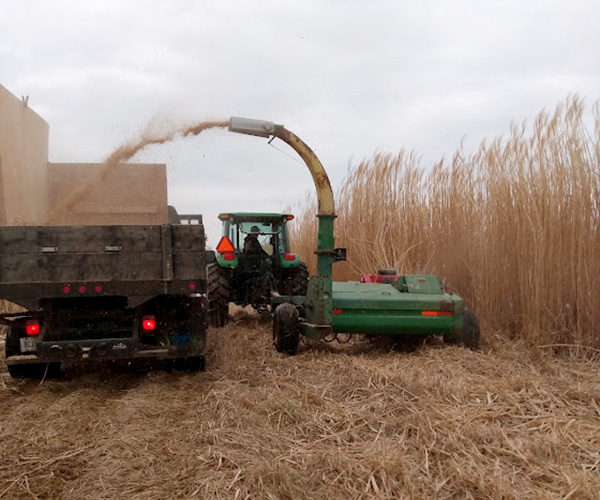
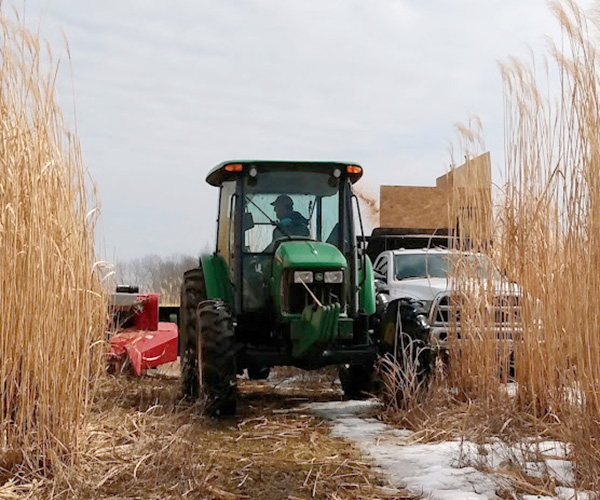
Harvesting for biomass is done late winter or early spring. This ensures the biomass will have low mineral and water content. Pelletizing the best use of the biomass for us and we at first believed we could bail, store, and later hammer mill down to a proper size. We learned that one rock at all in the miscanthus (from bailing off the ground) can damage the very expensive dye of the pellet machine. We now chop with an older 3940 John Deer with a F67 Dion head for biomass. This gives us a clean biomass sized for pelletizing.
We allow the first year crop to stand. We cut down the second year growth in the spring to clear the field of old weak stalk to prep for a clean 3rd year crop. This allows for easy fertilization and spraying for any remaining weed issues.
Rhizome Shipping:
Rhizome shipping: Once washed, the rhizomes are double bagged with moist chopped miscanthus biomass added for moisture control. The prepared bags are then placed in the appropriately sized box(es) for shipping.
Freight Trucking on Bulk Shipping:
We offer supersac bags for bulk orders over 5,000 individual rhizomes. Each supersac can hold approximately 5,000 - 8,000 rhizomes. Regardless of amount, each supersac individual bags each bag contains 125 rhizomes, making up the order. One supersac per pallet.
*Requirements to Commercial Ship: Commercial business address and a fork loader to unload the pallet. If you need additional services such as a lift gate, notify customer, or limited access the shipping cost will be higher.
If you would like this service, please call us for a quote @ (989)743-4344 or request a quote on our reservation form under 'Questions and Comments'.
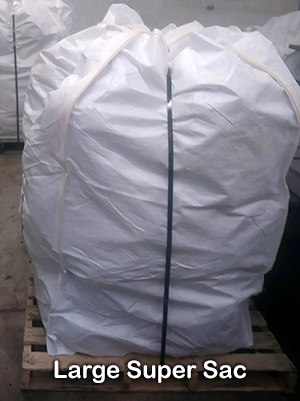
8,000 Piece Bag
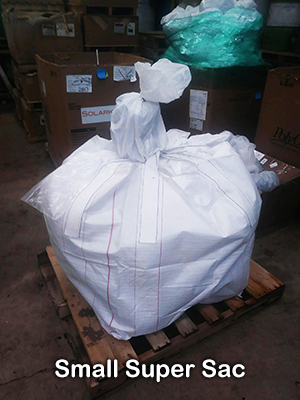
5,000 Piece Bag
(The small bag on top is an
example of a individual 125 rhizome
bag within that will make up
your supersac order.)
Bulk / International Sales:
In compliance with bureaucratic procedures, you the buyer must arrange for an import permit from your government (if necessary) so that our country may issue us an export permit. We have detailed information about the miscanthus that we would be happy to share to help you obtain your import permit. All orders to Canada are going to be required to get an Import Permit to help limit complications in customs.
Anything above 5,000 rhizomes and 320 clusters will be looked into being shipped as a super SAC to save on shipping.
A commercial address is required to ship through the trucking company.
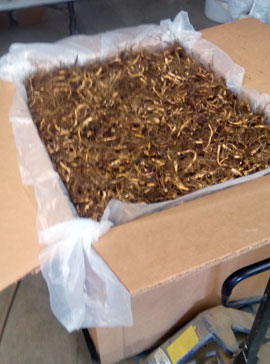
Shipment to Philippines
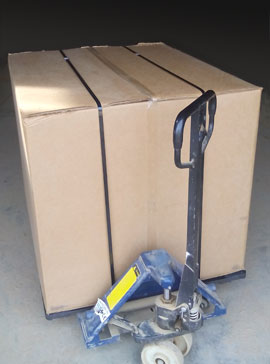
Shipment to Philippines
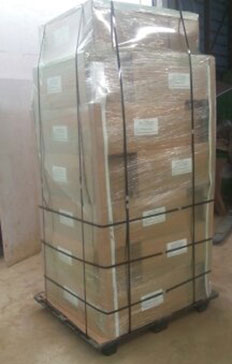
Shipment to Mexico
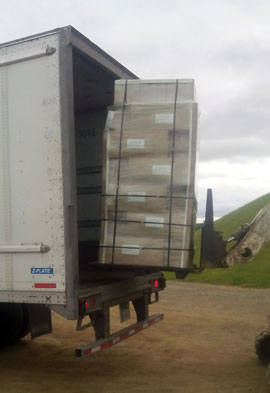
Shipment to Mexico
Miscanthus has made its way to Ireland with the sisters at St. Mary's Abbey. Below is an article that describes how they use the miscanthus on their farm for heating purposes. Lots of beautiful pictures included within the article.
https://www.nytimes.com/2023/05/04/climate/an-irish-abbey-where-the-grass-is-always-warmer.html
About Us:
Maple River Farms is located in the heart of central Michigan in the Maple River valley.
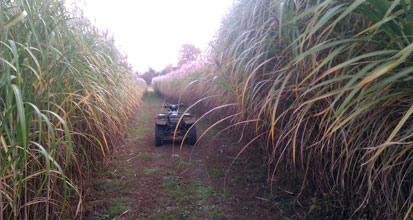
The farm was established with a goal toward introducing Miscanthus x Giganteus as a viable energy crop. Besides using the tall grass as an alternative energy source (Briquetting and Pelletizing) we have discovered that Miscanthus Giganteus makes an excellent privacy screen. In relation to that use, our deer population increased dramatically. The miscanthus field is being used as a bedding/hide area for not only deer but quail and turkey.
Being that the crop is a non invasive/sterile hybrid, we supply the rhizomes so that others may grow this very amazing grass for their own needs.
Follow us on Facebook to get our weekly updates on farm activities.
Don't forget to follow us on Instagram too.
Contact Us:
| Postal: | 1150 E. Hibbard Rd. P.O.Box 427 Owosso, MI 48867 |
| Phone: | (989)743-4344 |
| Email: | Don Honcoop at: don@mapleriverfarms.com |
| Office Hours: | |
|---|---|
| June - March | |
| Monday thru Friday: | 8:00AM - 4:00PM |
| April - May | |
| Monday thru Friday: | 8:00AM - 7:00PM |